
Oxnard's Surviving City Directory Sets
Oxnard's historical directory evidence is spread across county volumes, local archives, telephone books and subscription collections rather than one complete online shelf. This table separates verified years from broader coverage claims and keeps the publisher question visible: Los Angeles Directory Co. is named for 1929, R. L. Polk & Co. for 1961, and other records do not expose an imprint.
| Collection | Years | Where Held | Access |
|---|---|---|---|
| Ventura County Directory, including Oxnard (Los Angeles Directory Co.) | 1929 | Museum of Ventura County Research Library | Archive consultation |
| Ventura directory including Oxnard and nearby towns | 1930-31, 1934 | National Archives circa-1930 holdings | Holdings guide and archival access |
| Ventura County directory including Oxnard | 1941-42 | FamilySearch catalog 137690 | Catalog or account access may apply |
| Polk's Ventura County Directory (R. L. Polk & Co.) | 1961 | Scanned volume and 1961 title page | Image-level inspection; current shelf status unverified |
| Oxnard city volumes | 1930, 1931, 1938, 1948 | MyHeritage images | Likely subscription access |
| Oxnard city volumes | 1951-52, 1953, 1962-65, 1967, 1969-71, 1973-74, 1977, 1980 | Ancestry U.S. City Directories | Subscription or library access |
| Oxnard white and yellow telephone books | September 1947-April 1951; April 1952-April 1954; April 1955-April 1957; April 1958-April 1959; April 1960-April 1961; April 1962-April 1963 | Library of Congress digital collection | Free digital images; read each imprint |
| United States City and Business Directories | ca. 1749-ca. 1990 | FamilySearch collection 3754697 | Indexed search and images where available |
This is not a complete local shelf claim. The official Oxnard Local History page does not publish an exact inventory, and the first and last printed Oxnard editions remain unresolved. County books are verified for 1929, 1930-31, 1934 and 1941-42, telephone coverage for 1947-63, Polk for 1961, and subscription scans through 1980. Missing years and interruptions remain research gaps.
Oxnard City Directory: Local History Room Research
The Oxnard Local History Collection is in the Special Collection Room on the first floor of the Main Library at 251 South A Street. This appointment-only room is generally available Wednesdays from 1:30 to 5:30 p.m. A librarian assists with local research, but it currently has no printing. Prepare name spellings, an address and years to test, then confirm instructions on the official Oxnard Local History Collection page.
The noncirculating collection is for in-house use. Resolution 16,010 describes physical, digital and electronic materials focused on the Oxnard Plains, including significant family or local histories. The FY2024-25 budget records the room's reopening for preservation and research. Bring a notebook or permitted camera, note the volume and page, and ask staff to separate local shelf evidence from countywide references. No published shelf list establishes every title or year.
Oxnard's Verified City Directory and Telephone Runs
County material matters when a city directory is cataloged under Ventura rather than Oxnard. The National Archives lists Ventura books for 1930-31 and 1934 that include Oxnard, while the FamilySearch catalog entry 137690 identifies a 1941-42 Ventura County directory. A 1929 Ventura County Directory credited to Los Angeles Directory Co. is documented through the Museum of Ventura County. These are verified touchpoints, not proof of every intervening year.
The National Archives directory holdings guide establishes the circa-1930 row without proving what is on the Oxnard library shelf.
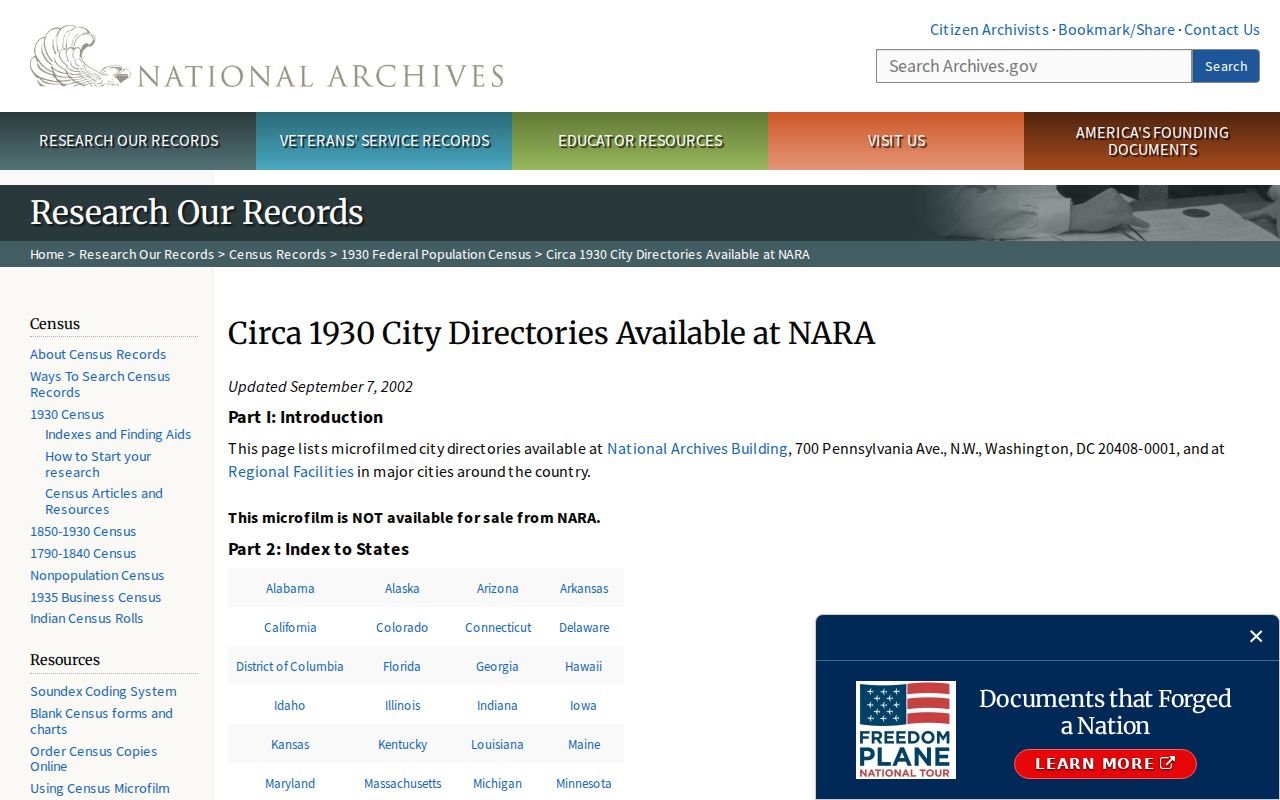
The image supports the NARA coverage lead; the local room and county archives still determine what can be inspected for a particular name or address.
Subscription scans add Oxnard years such as 1930, 1931, 1938, 1948, 1951-52, 1953, 1962-65, 1967, 1969-71, 1973-74, 1977 and 1980. The FamilySearch United States City and Business Directories collection spans roughly 1749 to 1990 and offers name, birth-place and birth-year fields plus images. Neither source makes the local sequence continuous, and unknown publishers should stay unknown.
Ventura County Library's local-history research page is another practical orientation point for county material and branch access.
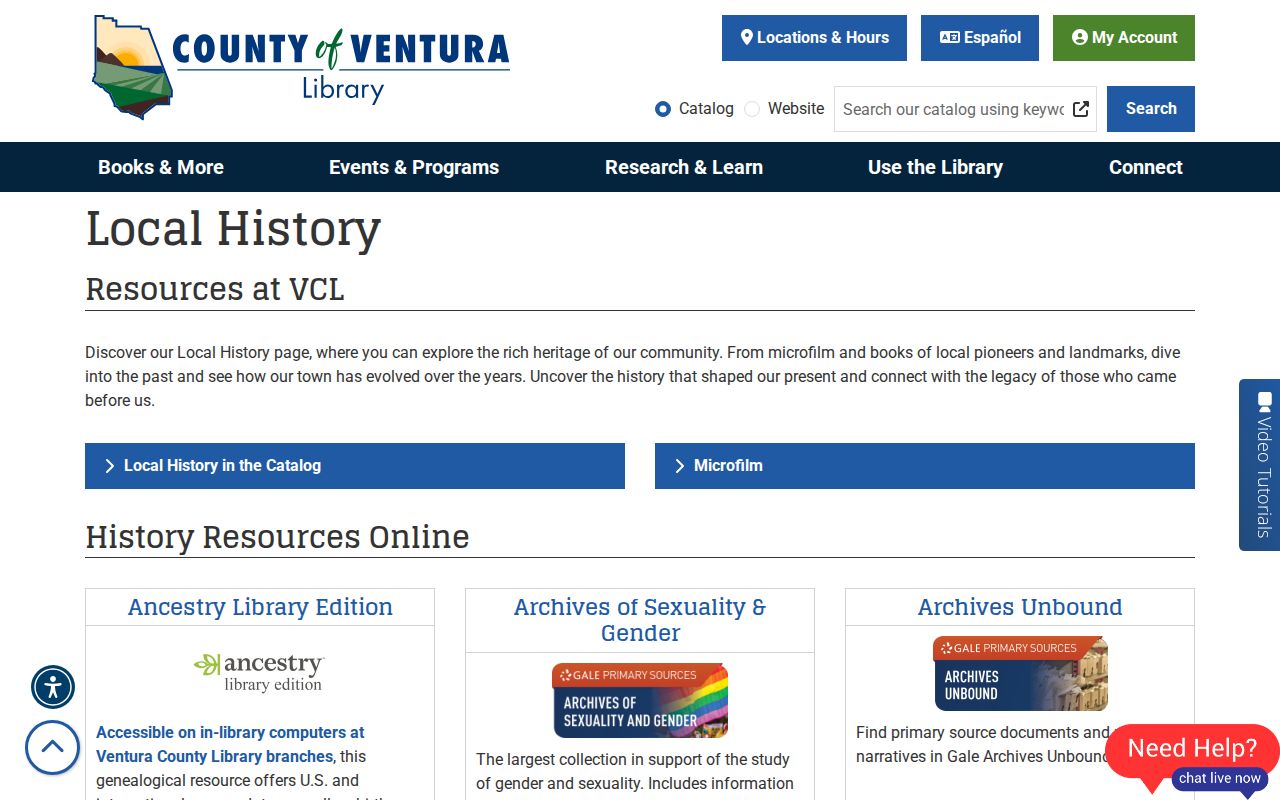
This image reinforces the distributed evidence: a county library, museum, federal guide and subscription databases each cover a different part of the Oxnard trail.
Inside Oxnard's 1961 Polk City Directory Listing
The 1961 Polk volume is an address-and-name cross-check, but it must be read from the source actually exposed. Its title page describes alphabetical businesses and private citizens, householders and office-building occupants, a street-and-avenue guide, numerical telephone directory, miscellaneous information, Yellow Pages and classified lists. Entries use surname and given name or initial, street number and name, locality codes such as (O) for Oxnard, occupational or business classifications, and exchange forms such as HUnter.
| Name | Surname followed by given name or initial in the alphabetical route. |
|---|---|
| Occupation or business | Contemporary occupational or business classification when the listing supplies one. |
| Address | Street number and street name, with a locality code such as (O) for Oxnard. |
| Telephone | Number and exchange clues, including the period form HUnter in the county volume. |
| Spouse or household notation | Not verified in the accessible 1961 OCR; inspect the page image rather than assuming a spouse field. |
| Owner or renter marks | Not verified for this Polk edition; do not assign a symbol from another publisher's book. |
The scanned 1961 Polk title page and volume support these routes. Start with a known name, switch to the street guide for an address-first search, then compare the numerical telephone section. The routes can produce different clues without proving residence or family relationship.
Oxnard City Directory Terms Worth Defining
- Criss-cross directory
- An address-first arrangement by street and number. Polk's title page confirms a street-and-avenue guide and numerical telephone directory, but not that the exact label appears in this edition.
- Householder index
- A route centered on householders or occupants rather than only commercial listings. Polk identifies householders and office-building occupants, but not unverified symbols or relationships.
- Abbreviation key
- The publisher's legend for locality, occupation, telephone or other marks. The complete Polk key was not exposed, so transcribe the actual legend before expanding an abbreviation.
For family history, record the printed form before normalizing it. A code, initial or exchange may be meaningful only within that volume. If a mark cannot be read, retain the uncertainty and test another year instead of importing a convention from a different volume.
Trace an Oxnard City Directory Household Through Years
A directory year is a dated clue, not a complete identity record. Pair it with the 1950 federal census, the newest public population schedule under the 72-year rule, and compare names, initials, household relationships, occupations, addresses and nearby entries. A 1948 scan, the 1950 census and a 1951-52 volume can show change without explaining an absent name by assumption.
- Begin with the strongest name form, then try initials, spacing, accents and both components of a Spanish compound surname.
- Record year, street number, street name, locality code, occupation or business description, and telephone clue without correcting the print.
- Follow the name into the next verified year, then switch to the street guide to test whether the block or nearby entries persist.
- Compare the snapshot with the 1950 census household, using address, age, relationship and occupation as separate checks.
- Use newspapers, archives or a later directory to explain a gap, and save the page citation.
A missing listing may reflect a publication gap, indexing choice, move, surname form or an uncaptured household. The Oxnard previous-residents search can take an address trail backward, but use two dated sources before treating a name as connected to a place.
Use Oxnard's Sanborn Sequence to Test a Directory Address
When a directory supplies an address but the household story is unclear, Sanborn maps provide a building-level companion. The Oxnard sequence is 1900, 1903, 1906, 1912 and 1929, with 1929 corrected to 1950. Sheets show footprints, materials, use, stories and outbuildings. The Library of Congress Sanborn collection supplies the edition context for a dated snapshot.
- 1900 establishes an early townsite baseline.
- 1903 adds an early townsite snapshot.
- 1906 adds another prewar building snapshot.
- 1912 tests changes after the early townsite period.
- 1929 and corrected-to-1950 bridge the directory and census eras.
Permits were not consistently required until the late 1940s, and some files are missing even for 1970s buildings. Read a directory address, Sanborn footprint, deed reference and aerial together. A missing permit is not evidence that a structure or alteration did not exist.
Let the Oxnard Press-Courier Microfilm Fill Listing Gaps
The Museum of Ventura County's Research Library and Archives is a nonlending repository with maps, photographs, newspapers, manuscripts, oral histories, video, government and family papers. Its 2018 inventory counted 15 newspaper microfilm titles reaching to 1851, including a 93-year Oxnard Press-Courier run, more than 42,000 photographs and business-incorporation files from 1873-1970. The MVC collections page and microfilm evidence show why newspapers belong beside a dated volume.
The Oxnard FamilySearch Center at 1150 Gary Drive offers volunteer help, Spanish-speaking assistance Tuesdays and Wednesdays, and access to restricted databases or technology. Listed hours are Tuesdays 6 to 8 p.m. and Wednesdays 7 to 8:30 p.m., with other times by appointment. The museum and center can bridge years in which a directory omits women, children, people using another surname or mobile households. Search obituaries, social notes, school events, business notices and wartime stories around a known year.
201 S. D Street Shows a Multi-Repository Method
A recent Oxnard house study shows how to combine a directory clue with other collections. The official 201 S. D Street assessment used the Local History Room's landmark file and 1981 survey, MVC drawings and Achille Levy papers, Sanborn maps, and UCSB aerials from 1927 through 2002.
Use a dated volume for a name and address, the Local History Room for survey files, MVC for papers, Sanborns for building form, and aerials for changes between map editions. The study does not create a complete resident list; it demonstrates a reproducible trail for family history and property curiosity.
Wartime Discontinuity in Oxnard Directory Trails
Oxnard's record trail can break for historical reasons a name search cannot reveal. Museum research describes Issei citizenship and property restrictions, sometimes placing titles in Nisei children's names, while forced removal fractured Japanese-American residence and ownership continuity. A directory absence, a title under another family member and a later newspaper reference may belong to one story without forming an annual chain.
Keep the printed name, address and year separate from interpretation. Compare pages with the Museum of Ventura County's Japanese-American history material, Press-Courier microfilm and oral histories. Do not fill a wartime gap with an invented move or relationship; mark it and find the next dated source.